

A Rich History
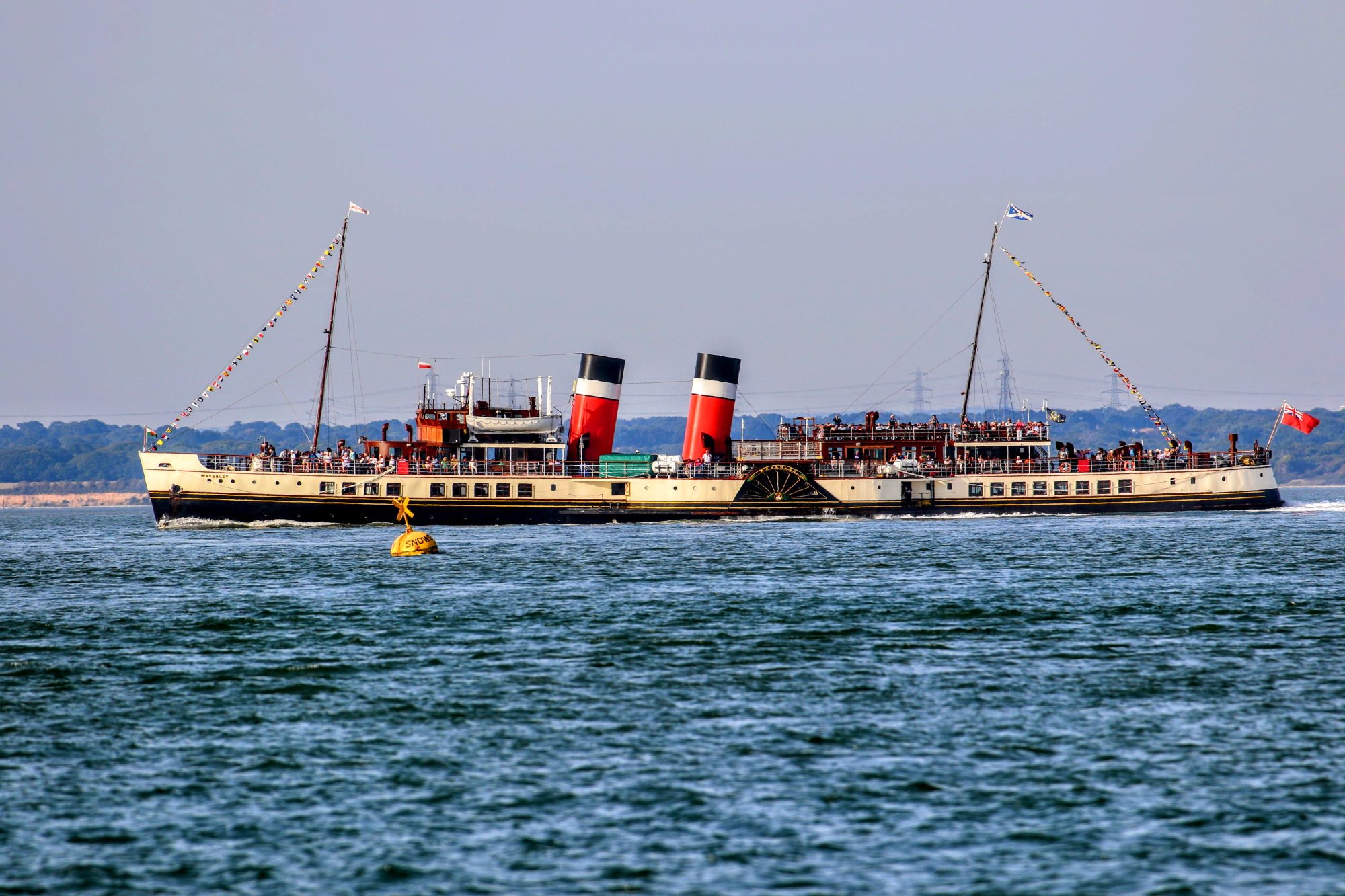
The story of the Waverley begins in 1947 when she was built by A. & J. Inglis of Glasgow, Scotland. She was commissioned to replace the previous Waverley, which had served in the Royal Navy during World War II. The new Waverley was designed to provide passenger services and excursions along the picturesque coastlines and waterways of the United Kingdom. From her maiden voyage on June 16, 1947, the Waverley quickly became a beloved part of British maritime heritage. She transported countless passengers and tourists along scenic routes, offering breathtaking views of coastal cliffs, historic towns, and idyllic islands. Her gleaming white superstructure and iconic red funnel made her instantly recognizable.
Paddle Steamer Elegance
One of the distinctive features of the Waverley is her paddle wheels, which are driven by a steam engine. Paddle steamers like the Waverley evoke a sense of nostalgia and romanticism associated with a bygone era of travel. The rhythmic churning of the paddles, the hiss of steam, and the melodious sound of her calliope create a unique and enchanting atmosphere for passengers.

Preservation and Restoration
The Waverley faced several challenges throughout her history, including periods of financial difficulty and the threat of retirement. However, her admirers and supporters were determined to keep her afloat. In 1974, after a heroic fundraising effort, the Paddle Steamer Preservation Society (PSPS) purchased the Waverley, ensuring her preservation for future generations. Over the years, the Waverley underwent extensive restoration and maintenance efforts to maintain her beauty and seaworthiness. The dedication of volunteers, engineers, and enthusiasts allowed her to continue sailing the seas, delighting passengers young and old.
A Floating Museum and Icon
Today, the Waverley Paddle Steamer continues to operate as a living piece of maritime history. She offers a range of cruises and excursions, allowing passengers to relive the golden age of steam travel while exploring some of the UK’s most scenic waterways. The Waverley is not just a vessel; she is a floating museum, a cultural icon, and a symbol of resilience and passion. Her meticulously maintained interiors, complete with polished woodwork, gleaming brass, and nostalgic decor, transport passengers back in time.

Cultural Significance
Beyond her physical attributes, the Waverley holds cultural significance as a representation of the UK’s maritime heritage. She has appeared in films and documentaries, and her image has graced countless postcards and travel brochures. She has been the subject of art and literature, inspiring creativity and nostalgia.
Special Cruises and Events
The Waverley offers a variety of special cruises and events throughout the year. These include themed excursions, heritage trips, and even evening dance cruises. One of the most popular annual events is the “Waverley’s Paddle Steamer Preservation Society Sailings,” which raises funds for the continued preservation of the vessel.

Looking to the Future
As the Waverley steams into the future, it continues to be a symbol of resilience and the enduring appeal of maritime heritage. The dedication of its crew, volunteers, and supporters ensures that this beloved vessel will continue to enchant new generations of passengers for years to come.
In conclusion, the Waverley paddle steamer is a cherished relic of British maritime history that continues to capture the imagination of all who have the privilege of sailing aboard it. Its graceful design, rich history, and the passion of those who keep it afloat make the Waverley a true nautical legend and a symbol of the enduring love for traditional seafaring in the United Kingdom.

Conclusion
The Waverley Paddle Steamer is more than a historic vessel; she is a living legend, a symbol of a bygone era, and a reminder of the enduring appeal of steam-powered travel. Her continued presence on the water is a testament to the dedication of preservationists, volunteers, and passengers who recognize her unique charm and value. For those who have had the privilege of stepping aboard the Waverley, the experience is nothing short of magical. As her paddle wheels turn and her steam whistle sounds, passengers are transported not only to different destinations but also to a time when travel was an adventure, and the journey was as important as the destination. The Waverley’s legacy is not just about the past; it is a living legacy that continues to bring joy, wonder, and a sense of connection to the rich maritime history of the United Kingdom. Long may she sail, reminding us of the enduring beauty and romance of the sea. — The Waverley Paddle Steamer remains a cherished and iconic vessel, captivating the imaginations of those who appreciate her historic significance and timeless elegance.
The History and Construction of the Waverley Paddle Steamer
The Waverley Paddle Steamer is one of the most iconic ships ever to sail the waters of Britain. Built in 1947, it is a celebrated symbol of maritime engineering and a cherished link to the era of steam-powered vessels. As the last seagoing passenger-carrying paddle steamer in the world, its legacy is deeply intertwined with the history of shipbuilding in Scotland and the broader narrative of industrial innovation in maritime transport.
Origins and Historical Context
The Waverley was named after Sir Walter Scott’s famous novel, Waverley, and is the second steamer to carry that name. Its predecessor was lost during World War II, sunk during the Dunkirk evacuation in 1940 while serving as a minesweeper. After the war, demand for recreational transport on Scotland’s River Clyde prompted the London and North Eastern Railway (LNER) to commission a new paddle steamer. The ship was intended to serve as a day tripper, carrying passengers from Glasgow to various coastal resorts along the Firth of Clyde.
Paddle steamers had been an integral part of Clyde river traffic since the early 19th century. Steam navigation on the river was pioneered in 1812 with the launch of the Comet, one of the earliest commercial steam vessels. Clyde shipyards became famous for building a variety of steamships, from ocean liners to smaller vessels used for local transport. By the time Waverley was launched in the late 1940s, the paddle steamer was a familiar sight, although its role was being gradually supplanted by more modern forms of transportation.

Construction and Design
The Waverley was built by A. & J. Inglis, a shipyard on the Clyde, renowned for its expertise in constructing paddle steamers. The ship was launched on October 2, 1946, and made its maiden voyage in June 1947. It was constructed using riveted steel plates, which was typical of shipbuilding at the time.
Waverley’s design reflects the classic paddle steamer layout. It is a sidewheeler, meaning that its two large paddle wheels are positioned on the sides of the vessel, rather than at the stern. Each paddle wheel is powered by a three-cylinder diagonal compound steam engine, which was built by Rankin & Blackmore, a prominent marine engine manufacturer based in Greenock. This engine generates around 2,100 horsepower and drives the paddle wheels at an average of 55 revolutions per minute.
One of the most striking features of the Waverley is its open promenade deck, which provides panoramic views of the surrounding landscape. The ship’s wheelhouse and funnel are located centrally, while passenger seating and lounges are situated below deck, designed for comfort during day trips. The interiors, though simple, are warm and welcoming, with polished wood and brass fittings that evoke the golden age of steamship travel.
Decline and Revival
Despite its popularity, the Waverley faced difficulties during the postwar years, as road and rail transportation became more dominant. By the 1960s, paddle steamers had become largely obsolete, and many were either scrapped or converted to other uses. Waverley managed to hold on longer than most, but by the early 1970s, it too was at risk of being decommissioned.
In 1973, Waverley was withdrawn from service by its then-owner, Caledonian MacBrayne, and put up for sale. Fortunately, a campaign led by the Paddle Steamer Preservation Society (PSPS) succeeded in purchasing the ship for a nominal sum of £1. Waverley was thus saved from scrapping, becoming the first vessel in the world to be preserved solely for its historical significance.
Since then, the Waverley has undergone multiple rounds of restoration, including a major overhaul in the late 1990s, when its steam engine was fully restored and many of its original features were brought back to life. Funding for these efforts has come from a variety of sources, including public donations and grants from heritage organizations.
Modern Operations and Legacy
Today, the Waverley operates as a heritage vessel, offering passenger cruises around the British Isles, particularly on the Clyde, the Bristol Channel, and the Thames. Its preservation is a testament to the dedication of maritime enthusiasts and the public’s love for this unique piece of nautical history. With careful maintenance, Waverley continues to delight passengers and serve as a living museum of the golden age of paddle steamers.
The ship’s distinctive design and engineering are celebrated by visitors from around the world. Its ability to continue operating as a fully functional paddle steamer is a remarkable achievement, one that highlights the skill of Scotland’s shipbuilders and the enduring appeal of steam-powered travel.
Conclusion
The Waverley Paddle Steamer is not just a relic of a bygone era but a thriving testament to the resilience of maritime heritage. Its storied history, from its construction in the postwar years to its role as a beloved heritage vessel, reflects both the rise and fall of paddle steamers and the broader evolution of passenger transport in Britain. Thanks to the efforts of preservationists, Waverley continues to inspire admiration and nostalgia, as well as offering a rare glimpse into the age of steam.
It stands as a symbol of Scottish engineering and the enduring legacy of the Clyde’s shipbuilding prowess, ensuring that the age of paddle steamers is not forgotten.